EDITORIAL
Switzerland Through Its Museums
WANDERER Vol.2 2025

I went to Switzerland to look at art. What stayed with me were the questions that interrupted the looking: how a painting arrived on a wall, why an artwork belonged in a living room, and what a museum asks of the people walking through it.
Words by Joshua Pang
Photography by Joshua Pang · Shot on Sony α7CR
Camera loan courtesy of Sony Malaysia
At Kunsthaus Zürich, I began by looking at the paintings. Before long, I was spending more time reading about how they had arrived there.
The exhibition A Future for the Past: The Bührle Collection shifted my attention away from brushstrokes and towards ownership. Archival photographs, letters and documents traced histories that were far less comfortable than the galleries in which the paintings now hung. War, displacement and the circumstances under which works changed hands became part of the viewing experience.
I had come expecting to admire an important collection of Impressionist and modern art. I found myself wondering what admiration leaves out.
That change of attention stayed with me as I travelled through Switzerland. Across museums in Zurich, Basel and Geneva, there was plenty to enjoy simply by looking: paintings I recognised, buildings I wanted to photograph, rooms where I was happy to linger. But the visits became more interesting whenever something disturbed that easy pleasure.



Looking beyond the frame
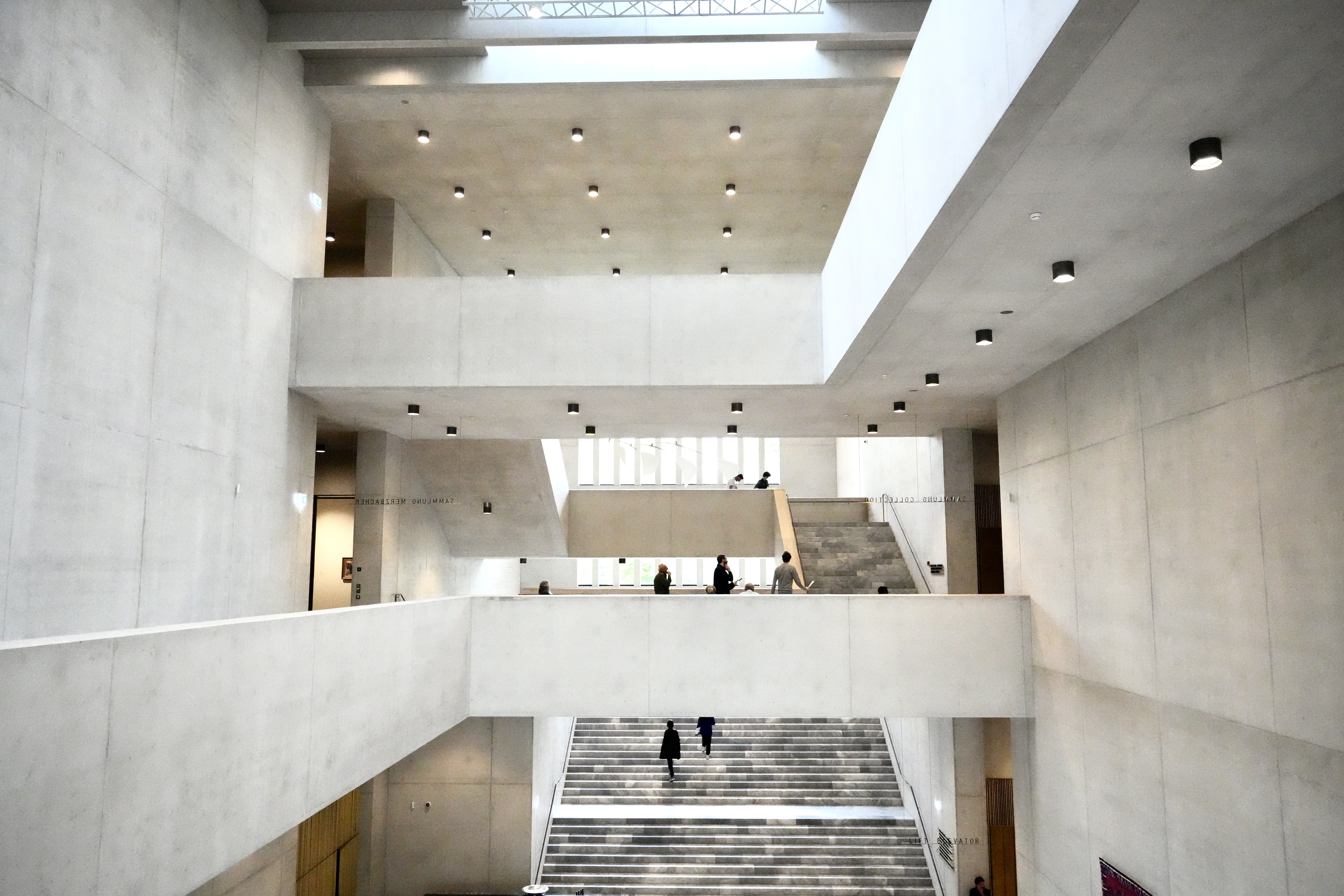
Kunsthaus Zürich makes a strong first impression. Its historic building and David Chipperfield's extension offer different settings for an extensive collection, with the newer building's pale stone and natural light encouraging a slower pace.
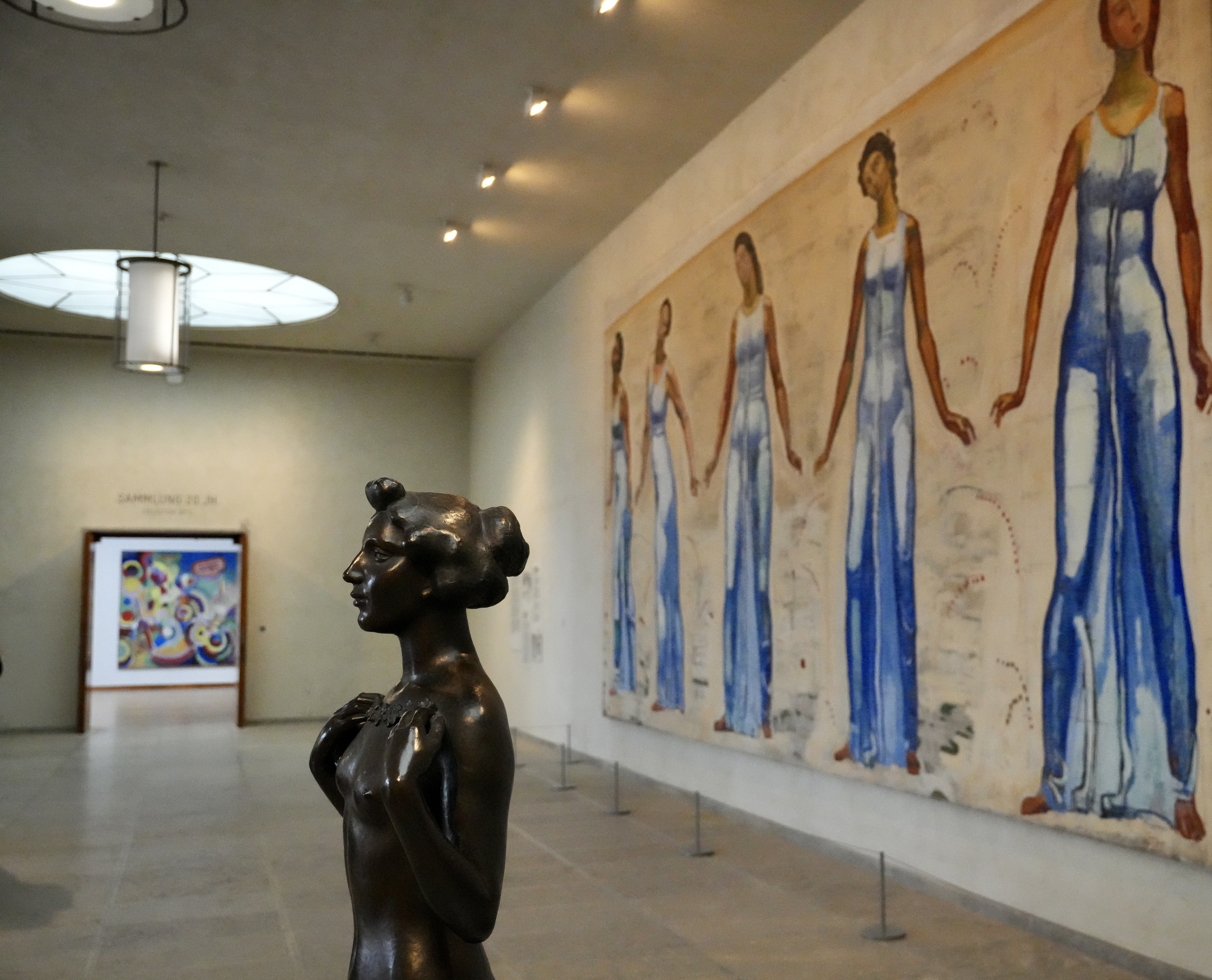
Moving between Monet, Picasso, Ferdinand Hodler and Alberto Giacometti, I could have spent the visit following familiar names. Recognition has its own appeal in a museum. You turn a corner, see something you know from books, and enjoy the small satisfaction of encountering it in person.
The Bührle exhibition complicated that experience.
Emil Georg Bührle's collection contains extraordinary paintings, but its history raises difficult questions about the relationship between wealth, collecting and the art market during and around the Second World War. The exhibition brought those questions into the galleries, placing the works within a history that could not be contained by their frames.
I found myself drawn to the people in the documents: collectors, former owners and others whose lives had intersected with the paintings before they became museum objects. A work on a wall can appear settled, as though it has reached its natural destination. Reading about its journey makes that impression harder to sustain.
I appreciated being asked to sit with that discomfort. It changed what I noticed, and made the visit harder to finish neatly. I could leave the gallery, but the questions followed.


An apartment inside a museum
In Geneva, MAMCO interrupted my expectations in a different way.
Housed in a former factory in the Quartier des Bains, it offered a change from the carefully composed galleries I had been visiting. Concrete floors and exposed structural elements remained visible. The art could be elusive, and the rooms did not always offer an obvious route into it.
Among the spaces that held my attention was a reconstruction of the Paris apartment of collector Ghislain Mollet-Viéville, displaying works by artists including Dan Flavin, Donald Judd, and Bernd and Hilla Becher.
An apartment inside a museum is an odd proposition. You are looking at artworks, but also at someone's decisions about how to live with them. Their placement becomes part of the subject. A wall, a corner or the relationship between neighbouring objects takes on a significance that might be less apparent in a conventional gallery.
It brought the idea of collecting closer to daily life. What happens when an artwork is something you pass repeatedly, rather than something you make a special journey to see? Does familiarity sharpen your attention, or allow it to fade into the room?
Elsewhere, Tishan Hsu's works suggested less comfortable relationships between bodies, machines and their surroundings. Surfaces resembling skin and flesh appeared alongside architectural and technological details. They demanded a different kind of attention from the paintings I had seen earlier in the trip.
I did not find every work immediately accessible. Yet that was part of the value of the visit: having to spend time with something before deciding what I thought of it.


Room to look
After those encounters, Fondation Beyeler offered a different pleasure.
Set in Riehen, just outside Basel, Renzo Piano's building keeps the surrounding landscape close. Through its glass walls, meadows and trees remain in view. I often paused to look outside, then returned my attention to the works.
The collection assembled by Ernst and Hildy Beyeler includes Monet, Cézanne, Giacometti and Rothko. What I enjoyed was the room given to individual works, and the ease with which I could move between looking at art and noticing the garden beyond.
For once, I did not feel the need to turn that pleasure into a larger conclusion. I was content to stay a little longer.


Across the centuries
At Kunstmuseum Basel, the range of the collection encouraged a different pace of looking. Moving from Hans Holbein the Younger's portraits to works by Picasso and Barnett Newman meant repeatedly adjusting what I paid attention to: the details of a face, the construction of a figure, or the relationship between colour and space.
The architecture gave those shifts a physical setting. The historic main building and the newer extension stand across the street from one another, connected underground. Their contrasting materials and proportions make the passage between them part of the visit. The main building's symmetry gives way to the extension's grey brick and cleaner lines, carrying the collection into a different setting.
What interested me was how works from distant periods could hold my attention for entirely different reasons. Holbein's portraits invited close examination. Modern paintings asked me to step back and take in the canvas as a whole. Moving between them made me aware of how much the act of looking changes from one room to another.
Seen alongside Fondation Beyeler, the museum gave my time in Basel a broader scope. At Beyeler, I had enjoyed lingering with individual works and looking out towards the garden. Here, I was drawn into the connections and differences across centuries. Familiar names provided a starting point, but the pleasure lay in seeing what surrounded them.




What looking asks of us
Coming after several days of looking at art, the museum made me think again about attention itself. We can be moved by an image or a story, then continue into the next room. Museums give those encounters a setting, but cannot determine what we do with them afterwards.
I had set out to discover Switzerland through its museums. Along the way, the country became less easily summed up by beautiful buildings and important collections. I encountered institutions willing to examine difficult histories, spaces that made unfamiliar ideas available, and rooms where looking was simply a pleasure.
The Bührle exhibition remained particularly clear in my memory. I could still appreciate the paintings. I just had more questions to bring to them.
Originally published in WANDERER Vol.2 in 2025. Revised for this website.
With thanks to Switzerland Tourism for hosting this journey through Switzerland's museums.
Special thanks to Sony Malaysia for loaning the Sony α7CR used to photograph this journey.
